My vision has changed many times over the years, but now I’m 99 percent sure I’ve settled on my main vision: a think tank of animal rights activists building an umbrella network, with local chapters that support every person and group working for animals without competing with any of them. The heart of it is a cooperative community on land held in a land trust. People who share this vision and live together can be far more effective, because we’re together so much and can get more done. We can also model a vegan cooperative community, which is much needed. It will start with me living on the land or nearby and reaching out to people who share my vision and values, who will eventually join me in living here. As we live and grow together, the vision can evolve. These articles, written over the past thirteen years, let you get to know me and my history along the way.
This toolkit features communication strategies and philosophies that I have found useful. It is a work in progress and will be updated with new resources on an ongoing basis.
Nonviolent Communication
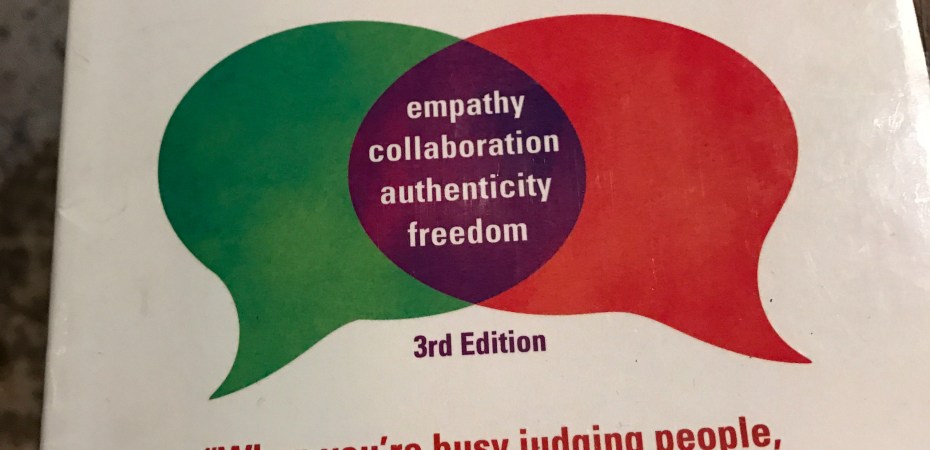
Nonviolent Communication (NVC) is a process developed by Marshall Rosenberg and others used to communicate with greater compassion and clarity. It focuses on two things: honest self-expression — exposing what matters to oneself in a way that’s likely to inspire compassion in others, and empathy — listening with deep compassion. Formal NVC self-expression includes four elements: observations (distinguished from interpretations/evaluations), feelings (emotions separate from thoughts), needs (deep motives), and requests (clear, present, doable and without demand).
In NVC, it is assumed that all actions are motivated by an attempt to meet human needs. However, in using NVC to meet needs, we seek to avoid the use of fear, guilt, shame, blame, coercion or threats. The ideal of NVC is to get one’s own needs met while also meeting others’ needs. A key principle of Nonviolent Communication that supports this is the capacity to express oneself without use of good/bad, right/wrong judgment, hence the emphasis on expressing feelings and needs, instead of criticisms or judgments.

