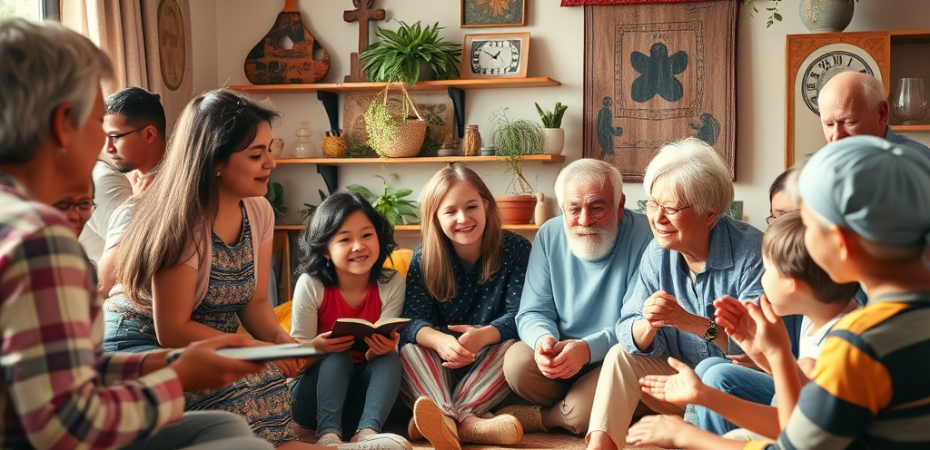
I did revise this AI generated description of a house church, but I didn’t change much. I definitely want to refine this, but for now it will do as a kind of placeholder for future ideas and input. The Christian Monastery which is being developed will be in charge of organizing the house church yet will create decision making structures using Sociocracy 3.0 so everyone can give input
House Church Intergenerational Design
Based on the provided search results, here’s a comprehensive guide to creating a house church that is intergenerational, interesting, building faith, inclusive, governed fairly, and incorporates different doctrines:
1. Intergenerational Structure
- Incorporate people of all ages (children, youth, adults, seniors) into the leadership and decision-making process.
- Designate a diverse leadership team with representatives from different age groups.
- Encourage mentorship and apprenticeship relationships between generations.
2. Interesting and Engaging Sabbath Rest Gatherings
- Use a variety of singing styles and formats, such as:
- Storytelling and testimony-sharing
- Music and arts (e.g., singing, playing instruments, visual arts)
- Interactive discussions and Q&A sessions
- Service projects and outreach activities
- Bible Studies
- Christian Apologetics
- Incorporate different doctrines and traditions, ensuring that all perspectives are respected and valued.
3. Building Faith and Spiritual Growth
- Focus on biblical teaching and application, using a variety of resources and methods (e.g., sermons, small groups, one-on-one discipleship).
- Encourage personal spiritual practices, such as prayer, journaling, and scripture meditation.
- Provide opportunities for spiritual disciplines, like fasting, service, and singing.
4. Inclusive and Participatory
- Ensure that everyone has a voice and a role in the church.
- Use participatory leadership models, such as Sociocracy 3.0
- Encourage active participation in singing together, weekly gatherings, small group discussions, and service projects.
5. Fair Governance
- Establish a clear decision-making process, with transparency and accountability.
- Use a combination of appointed and elected leaders to ensure representation and checks-and-balances.
- Develop a written constitution or bylaws that outline the church’s structure, roles, and responsibilities.
6. Incorporating Different Doctrines
- Embrace diversity and respect for different theological perspectives.
- Encourage open and respectful dialogue about doctrine and theology.
- Use a variety of resources and teachings to educate and inform members about different doctrines and traditions.
7. Practical Considerations
- Meet in a private home or a rented space that is accessible and comfortable for all ages.
- Establish a regular schedule, with flexibility for special events and activities.
- Develop a system for communication, such as email or a private online group, to keep members informed and engaged.
Example of a House Church Structure
- Meet in a private home or rented space
- Leadership team: 3-5 members from different age groups (e.g., 2 adults, 1 youth, 1 senior)
- Gathering style: Storytelling, music, and interactive discussion
- Spiritual growth opportunities: Small groups, one-on-one discipleship, and spiritual disciplines
- Governance: Consensus decision-making, with appointed and elected leaders
- Incorporating different doctrines: Respectful dialogue and education about various theological perspectives
Key Principles
- Prioritize spiritual growth and discipleship
- Foster a sense of community and belonging
- Encourage active participation and leadership
- Respect and value different theological perspectives
By incorporating these principles and structures, your house church can become a vibrant and dynamic community that is intergenerational, interesting, building faith, inclusive, governed fairly, and incorporates different doctrines.
…………………
Patricia says: “I did not research these resources but AI suggested them and they probably have some good ideas.”
Popular Articles on Starting House Churches
The most popular articles about starting a house church include:
- Developing a House Church: This article discusses common issues people face in traditional church settings and suggests that a house church can provide a more intimate and spiritually fulfilling environment
- Starting A Church From Scratch: A Step-by-Step Guide – House Church Me: Published on October 21, 2024, this guide covers essential steps for starting a church, including developing a vision, attracting members, navigating legal requirements, and creating an engaging worship experience
- How To Start A Home Church – House Church Me: Published on October 19, 2024, this article provides a quick, informative guide on how to start a home church, emphasizing the importance of community, worship, and prayer
- StartCHURCH Blog – Your Essential Guide to House Church in 2022: This blog post highlights the simplicity and impact of house churches, noting that they can be effective in different ways compared to larger churches and can connect families in defined regions
- How To Start a House Church (And Why You Shouldn’t): Published on December 1, 2024, this article explores the simplicity of house churches and provides practical advice on how to start one, including the core components of community, worship, and prayer
- Practical Considerations for Starting House Churches – NTRF: This article, published on December 3, 2022, offers practical advice on starting house churches, including the importance of aligning with an established church for support and the need to be intentional about church practices.
Patricia says: “I listened to this entire series, and it really inspired me to quit using the word “worship” and commit to creating a house church.
Patricia says, “I also want to use ideas that I have used with great success with the Community: Connect project in a house church weekly service.
In addition, to encourage Sabbath rest, I have experienced the benefit of having an all day gathering which really encourages the building of community. This can included the following which is mostly AI generated:
Here are some ideas for a house church gathering that can bring people of all generations together in an informal setting:
- Singing Session: Start with a casual worship session where everyone can sing along to popular Christian songs or hymns. You can also have a few volunteers lead the worship with their instruments. People can suggest their favorite songs which are in a comprehensive song book. Singing acapella mostly can help people to blend their voices.
- Testimony Sharing: Encourage everyone to share their personal testimonies of how they came to know God or how He has been working in their lives. This can be a powerful way to build community and connection among the members.
- Group Discussion: Prepare some thought-provoking questions related to faith, life, or current events and have a group discussion. This can help foster meaningful conversations and connections among the members. Divide into small groups for more active participation. Have different generations in the groups.
- Service Project: Organize a service project that everyone can participate in, such as packing care packages for the homeless, writing letters to prisoners, or cleaning up a local park.
- Potluck Dinner: Host a potluck dinner where everyone brings a dish to share. This can be a great way to break the ice and build relationships over food. Encourage people to bring fruit for breakfast and healthy plant-based foods for lunch. Fast the rest of the day together on liquids for those who can do so. Fasting together makes it much easier to do.
- Games and Activities: Plan some fun games and activities that can be enjoyed by all ages, such as a scavenger hunt, a game of charades, or a puzzle competition.
- Prayer Circle: End the gathering with a prayer circle where everyone can share their prayer requests and pray for one another. There can also be prayer circles throughout the day, with people feeling comfortable to ask for prayer and laying on of hands.
- Community Time: Set aside time for community building, such as sharing about hobbies, interests, or passions. People can bring their knitting, sewing, quilt-making, or other crafts to do together.
Some specific ideas for activities that can be done in a house church setting include:
- Bible Study: Have a group Bible study where everyone can discuss the reading and share insights. Include Christian apologetics and teachings of the early Christian fathers.
- Creative Expression: Provide art supplies, musical instruments, or writing materials and have everyone express their creativity through art, music, or writing. Make a mural that could be posted.
- Outdoor Games: If the gathering is held outdoors, consider playing games like soccer, frisbee, or capture the flag. Cooperative games really build community and can be intergenerational.
- Karaoke: Set up a karaoke machine and have a sing-along session.
- Movie Night: Screen a Christian-themed movie or a classic film that can be enjoyed by all ages.
- Spending time in nature: For some solitude or small group time, walks can be taken if possible
Remember to keep the activities simple, fun, and engaging for all generations. The goal is to build relationships and community, not to create unnecessary stress or pressure.

