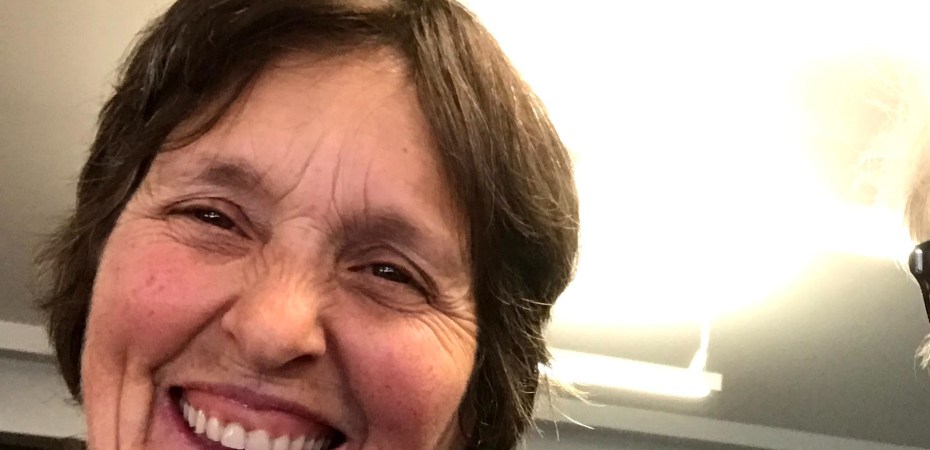
I believe that we can heal from our past traumas in loving, healthy community.
Some of the values, habits and philosophies have a link in the title. Click on that link and you will find the topic covered in more detail. If it has an asterisk, that means I haven’t completed the description yet–but soon I hope to! The links will go to the Jesus Vegans site, which was my old community site. The http://www.jesusvegans.wordpress.com blog was my original blog that I started about 3 years ago. I originally wanted to have a Christian community, but I realized that Christianity has turned off people so much. I did a lot of work there–but I just could not fathom the idea of the wonderful people who have been turned off by Christians feeling turned off because they thought the community would just be for Christians.
As I define these values, I always ask myself the question that I was taught when I was about 8 years old. “If everyone in the world did this, would this be good for the entire world?”
Perhaps you could ask this question yourself to determine if you might like to adopt some of these values. If you want to come and visit, and be a provisional member, you don’t have to share all the values. Come and see if you might see the value of the values
One of the main reasons living in community with shared values is so helpful is that we can encourage each other to live in congruence with values. When we “walk our talk” we can more easily achieve our goals and be more effective in living our mission of creating a world where all of life thrives. Our personal power increases exponentially when we live in congruence.
There is so much emphasis on being able to get along with people who are completely different from us. I agree that I would never want to force anyone to change their values. Yet I think that if we disagree on too many foundational values, it will be harder to work together. Working together to help transform our collective consciousness into one where happiness, kindness and compassion is the norm, is what I am hoping for.
These are included because they demonstrate even more deeply why these topics are so important to include in our values, practices and philosophies to go even more deeply into the reasons.
Unity: We seek the good in every perspective and believe that all human beings are connected to each other and the Cosmos at large. We look at our differences and work them out in ways that everyone gets their needs met. We are people with varying thoughts, philosophies, and theologies, and we seek to integrate our diversity into a healthy unity. While we have no desire to endorse world-views that are destructive, we look at actions which are less than nurturing as tragic requests for love.
Veganism: I align with a Biblical and historical Christian view of veganism. Read more here.
Spiritual Practices and celebrations: We practice such things as meditation, prayer, Bible study, worship, singing, fasting and other practices that support us in getting in touch with Jesus and God and support us in living out the values that have been listed.
Having a Vision: “Without the vision the people will perish,” Proverbs 29:18. “A clear vision helps you pursue dreams and achieve goals; an idea of the future, a strong wish. … A vision will help you to overcome obstacles in the way and helps you hold on when times are tough. A vision that is well defined helps you to focus and create a purpose that becomes your measurement for your success.” Read more in this article at the Dream Manifesto website.
Healthy Shared living/Interdependence
Practices and philosophies:
Celebration naturally elicits enthusiasm and excitement. It inspires, enlightens and motivates us to find greater understanding, wisdom and solutions to the problems we face. Celebration frees your creative essence and provides the fuel and resources to move beyond your problems and find the answers you seek.” Read more here.
Educational Philosophy: We support life-long learning. Unschooling is one way to define this value. See more here.
This article and video is helpful also:
Extended Family: We create smaller groups within the larger community so that people are a part of an intergenerational group which is similar to an extended family.
We encourage people to stay in touch with their families, and if possible, that they can be reconciled with their family if that is a need. We also find ways for families to live in the community, near by, or visit.
*Intentional Residential Community: “An “intentional community” is a group of people who have chosen to live together with a common purpose, working cooperatively to create a lifestyle that reflects their shared core values. The people may live together on a piece of rural land, in a suburban home, or in an urban neighborhood, and they may share a single residence or live in a cluster of dwellings.” Geoph Kozeny from this article on the Federation of Intentional Communities website.
*Land Stewardship rather than Ownership: “In the settler mind, land was property, real estate, capital or natural resources. But to our people, it was everything: identity, the connection to our ancestors, the home of our nonhuman kinfolk, our pharmacy, our library, the source of all that sustained us.” From The Land Trust Alliance. I want people to be able to pass their land and the work they have done down to their children in a way that their children can have limited freedom on the land they inherit. Limited, because they need to act in alignment with the rules of the larger community and land which is held in common.
Non-Hierarchical Governance and Shared Decision Making: We create systems that invite the input of everyone and use strategies that help everyone to get their needs met. Sociocracy 3.0 offers well-tested, always improving, patterns which will guide us. We use the patterns from Sociocracy 3.0 which guide us.
*Right Livelihood: We create business and income streams that enable us to do things that we love and which are in alignment with our values and goals. This website from the Right Livelihood Foundation states: “The idea of ‘right livelihood’ is an ancient one. It embodies the principle that each person should follow an honest occupation, which fully respects other people and the natural world. It means being responsible for the consequences of our actions and taking only a fair share of the earth’s resources.”
Egalitarian/Shared Income: Some community members will be part of this sharing economy. The Fellowship of Egalitarian Communities have found that the income sharing model works well. Reba Place Fellowship, a Christian Community, has successfully practiced this principle for decades. Read more here. The Fellowship of Egalitarian communitiesdoes not have a huge list of communities, but the ones they have as members are very successful and their model is so in alignment with many of our values. This website also offers a well-organized list of resources that are helpful for any community in formation.
Ethical Living
Practices and philosophies
*Congruency: “There is a reality that few people recognize. An individual can not effectively manage time without personal congruity, and congruity is not possible without clearly defined values that are brought under control in personal thought and performance.”Charles Hobbs. Hobbs defines congruity as “experiencing balance, harmony, and appropriateness with events in your life.”from a post in the Vasthead Blog
Consistent Life Ethic: The, consistent life ethic is an ideology that opposes abortion, capital punishment, assisted suicide, and euthanasia. Adherents are opposed, at the very least, to unjust war, while some adherents also profess pacifism, or opposition to all war. Vegans are now adding the idea that valuing other-than-human life is part of the consistent life ethic. Patricia wrote this article and another about her experiences praying for the unborn at Planned Parenthood.
Nonviolence: Also know as “Ahimsa.” “Nonviolence is the personal practice of being harmless to self and others under every condition. It comes from the belief that hurting people, animals or the environment is unnecessary to achieve an outcome and refers to a general philosophy of abstention from violence.” From Wikipedia
*Veganism: a way of living which seeks to exclude, as far as possible and practical, all forms of exploitation of, and cruelty to, animals for food, clothing, or any other purpose. I wrote this article about why I adopted this value in 2016
Truth: “Truth, like knowledge, is surprisingly difficult to define. We seem to rely on it almost every moment of every day and it’s very “close” to us. Yet it’s difficult to define because as soon as you think you have it pinned down, some case or counterexample immediately shows deficiencies. Ironically, every definition of truth that philosophers have developed falls prey to the question, “Is it true?” Excerpt from the article, What is Truth on the Philosophy News website.
Physical Health
Practices and philosophies:
Healthy relationship with food: We find ways to make sure that we are eating to live, not living to eat. Eating a raw plant-based diet prevents over-eating.
“The apple is a gift of the tree and of the infinite universe propagating and celebrating itself through the pale The seeds fall, in the apple, to become new trees or are eaten by humans or bears or birds and thus are distributed more widely, spreading and benefitting the tree and the whole systems, unfolding in the utter vastness, complexity and perfection. If we become aware of this when we eat an apple, we will know we we are loved and nourished, and that we are part of something greater, a mystery so immense and benevolent and exciting that we can only be touched by the sense of sacredness…Eating an app with awareness can be a sacred feast, and yet it is usually done casually while we are preoccupied with something else.” Will Tuttle, World Peace Diet
Holistic Healing: Is the practice of health and wellness that considers the entire person and all of the internal and external factors affecting them. Holistic healing considers the whole person by including their mind, body, spirit, and heart in treatment considerations. This website by Val Silver about holistic healing is very comprehensive and offers a wide array of healing techniques.
Moving Our Bodies: We make time for moving our bodies in ways are fun and that keep us youthful and fit. Encouraging each other and doing things together help us to have the discipline to do things like acro-yoga, exercise, physical labor, swimming, running, volleyball, basketball, kickball, cooperative games, laughter yoga, dancing and hiking.
Raw Plant Based Diet: 70 to 90 percent raw whole foods.
Healthy Relationships with people
Practices and philosophies:
Conflict Prevention and Resolution: We build a positive atmosphere where people feel safe, empowered and connected to each other and thus we easily prevent conflict. We see conflict as opportunities to learn and grow, and deal with disagreements in ways that help us to be closer to each other than ever.
Effective Communication: We are using a variety of models, taking the best from them and leaving the rest, including Nonviolent Communication Empathic listening is keys to success when it comes to understanding each other. Forgiveness and reconciliation result from our practices.
Friendship: We will encourage healthy friendships which help us deal with life’s challenges, make better choices that keep us strong, and even boost our immune systems. Friendship is important for our mental health. This book, 7 Principles For Making Marriage Work, can be easily applied to friendships.
Monogamous marriage: We celebrate and encourage. committed relationships within marriages including same sex marriage. This article from the Federation of Intentional Communities lists the pros and cons of monogamy, and I think the pros of monogamy win out. Government doesn’t need to approve of marriages with a license. We as a community can celebrate the commitment between two people and help them to thrive within the greater community.
Purity/Chastity: We subscribe to scientific proof as well as spiritual belief that sex outside of marriage is not healthy for individuals or the community. ”
“There’s a myth that all people who practice abstinence are Christians. From what we can tell, this isn’t accurate. Although we do have many Christian members, we also have members of all other major faiths, including agnostic and atheist waiters. Waiting on sex is as much a personal decision as it is a religious one, and our diverse membership reflects that.” From the secular website called Waiting For Marriage.
“The virtue of chastity has traditionally been portrayed as an excellent personal disposition towards the ideal ordering of sexual desire such that the agent desires that which is actually good for both the self and others affected by his or her sexual desires and actions. From the Stoics to the Enlightenment thinkers it had been thought that chastity was a valuable virtue that was worth developing for the sake of both self and others based entirely upon secular reasons. Yet, that view is less common today. Instead, chastity is sometimes portrayed as an unnecessary ideal with few secular benefits that could not be otherwise obtained.” From a description of a seminar on chastity.
Trust building and Integrity: Trust is important because it is the basis around which all human relationships revolve. Without trust there can be no relationship. This includes transparency, authenticity and vulnerability.
*Healthy Parents/Healthy Children: Using the principles of Attachment parenting is the one of the main ways we can foundation of healthy parenting. Attachment parentingfocuses on the nurturing connection that parents can develop with their children. That nurturing connection is viewed as the ideal way to raise secure, independent, and empathetic children.
“*Taking Responsibility for One’s Actions: This article describes 10 ways to take responsibility.
Healthy emotional life
Emotional Health: “Emotional intelligence is generally said to include at least three skills: emotional awareness, or the ability to identify and name one’s own emotions; the ability to harness those emotions and apply them to tasks like thinking and problem solving; and the ability to manage emotions, which includes both regulating one’s own emotions when necessary and helping others to do the same.”
Healing our childhood and societal wounds is part of having emotional health. Here is an example of method of healing.
Immanuel Approach helps victims of slave trafficking have emotional healing
Healing our past: This includes doing healing work with our children and/or the people who raised us, and our family of origin. We encourage people to stay in touch with their families. If family members want to live in the community, they can apply. Or, if values are not shared, there is a lot of land for sale near by so that family members can stay together.
Healthy relationships with nature and non-human life
Practices and philosophies:
Connect with nature: This article gives tips on how to have a spiritual connection with nature. This article talks about “nature deficiency disorder.” See more in the Rewilding value here.
Interspecies Communication: We learn from indigenous people and science how to connect with plants, and the natural world. More in this article.
“In this age of ecological emergency, more people are seeing the need to recognize their connection with all living . Communication between humans and animals has taken on a deeper meaning and urgency. We can learn so much from the animals about how to live in harmony and balance on the Earth. For animal lovers, direct telepathic communication boosts the understanding, joy and richness possible in relationships with their animal companions and all of life.” More about this topic in the website ww.wAnimalTalk.com
Decrease our environmental footprint: We increasingly refrain from doing things that hurt the environment. We aim for self-sufficiency and zero waste. We ask the question, as the native Americans do–how will this affect the next seven generations. We practice Zero Waste principles.
Zero Waste:“The simple definition: to send nothing to the landfill. The more complex and accurate description: To completely redefine the system, to move to a circular economy and write waste out of existence.” From the website Going Zero Waste.
This is a zero waste article from a vegan perspective from the website https://nutriciously.com
Rewilding: “Like our environment, which is forever altered due to human intervention, human nature has also been irrevocably shifted. Rewilding isn’t about trying to go back to living as hunter-gatherers. Rather, it is about examining our cultural paradigms, seeing how they affect our physical, mental, and emotional health, and reclaiming our birthright as human beings. Read more here.
Minimalism: Here is a lovely article describing the concept. I wrote article this in 2016. I dedicated about 17 years of my life to help people simplify their lives by helping them downsize, declutter and get organized. Website here.
Healthy Connection With Our Neighbors and The World
Practices and philosophies:
*Community Outreach: We cultivate mutually beneficial relationships with our neighbors and the larger community in Living Springs, Kingston, Huntsville, Madison County, Fayetteville, Eureka Springs and Northwest Arkansas.. We do all that we can to help our neighbors and extended network to cooperate with each other, solve problems, and become a beacon of healing and light. We have community-building activities like work parties and festivals for our neighborhood and the larger community that meets their needs and ours.
Reaching Out to the larger world:We share our knowledge and experiences with others through blogs, ebooks, websites, printed medium, workshops (onsite and elsewhere), internships, webinars, conference calls. We share our experiences of success that we have experienced both in our community and from past experiences. We share activities and material items to enrich our larger community. This blog about the Kindness Alliance I co-founded describes one kind of outreach we could do.
Local foods: We grow as much food as possible. We find wild edibles. We shop at farmers markets and trade with and buy from local farmers.
Healthy Character
Practices and philosophies:
General resources: Character Day https://www.letitripple.org/character-day/
Critical Creative Thinking: “Critical and creative thinking involves students thinkingbroadly and deeply using skills, behaviours and dispositions such as reason, logic, resourcefulness, imagination and innovation in all learning areas at school and in their lives beyond school.” From this website.
This article gives some good tips on how to think critically.
Self Reflection/ and ability to change: “Self-reflection is defined as “meditation or serious thought about one’s character, actions, and motives.” It’s about taking a step back and reflecting on your life, behavior and beliefs.” From Life Hack Website.
Having self-awareness is essential so that we can be able to admit when we are falling short. We gently help each other to see the truth as we perceive it. Here is a blog post I wrote about being in denial, the opposite of this stated value.
Humility: “Research demonstrates that humility is closely correlated with courage, integrity, strong leadership, self-control, learning, and better relationships. Here are ten characteristics of a humble person that move us to the above-listed desired outcomes in life” Read more in here in Craig Finnestad’s blog.
Resilience: “The capacity of a system to absorb disturbance and reorganize while undergoing change, so as to still retain essentially the same function, structure, identity, and feedbacks.” (54) In other words, resilience does not mean putting a fence around one’s community, refusing to allow anything in or out. It means “being more prepared for a leaner future, more self-reliant, and prioritizing the local over the imported.” (55)” From the Transition Town Handbook reviewed on the Resilence website here.
Compassion: “The principle of compassion lies at the heart of all religious, ethical and spiritual traditions, calling us always to treat all others as we wish to be treated ourselves. Compassion impels us to work tirelessly to alleviate the suffering of our fellow creatures, to dethrone ourselves from the centre of our world and put another there, and to honour the inviolable sanctity of every single human being, treating everybody, without exception, with absolute justice, equity and respect.We empathize with the suffering of all of life. We empathize with each other in order to create an atmosphere of love and safety where we can be our authentic selves.” From the Charter for Compassion website. Find more here.
Respect: “It’s the sense of worth or personal value that you attach to someone. Respect is an overall evaluation you give someone based on many factors – what that person is doing with their life, how they treat you and others, whether they are honest or not and if they seem to consistently do good things, large or small, for other people. In short, respect is a positive view that you form of how someone is living their life. On the other hand, self-respect is your view of how you’re living your life.” Read more in this article, with which I definitely don’t agree with on everything-but it does offer a comprehensive view of respect. I learned a lot.
Self Control: “Self–Control is “doing what is right, even when I don’t feel like it.” Imagine riding in a car that is out of control. … Self–control is like having steering and brakes in the journey of life. It means saying “no” to some things in order to say “yes” to something better—something that can help you reach your goals!” From the Character First Education website
Life-time Learning/Being on the cutting edge/trendsetters: I wasn’t sure where to put this but I’m trying out in the character section. I wrote this article about how I have been in touch with trends that now are or becoming widely accepted.
Appreciation: We look for, dwell on, and tell each other about observable behaviors that we see which we find nurturing. We also notice progress in these areas and share this with each other. We delight in each other!
Joy
Peace
Patience
Kindness
Healthy Justice
Practices and philosophies:
Diversity: Diversity refers to both an obvious fact of human life—namely, that there are many different kinds of people—and the idea that this diversity drives cultural, economic, and social vitality and innovation. Indeed, decades of research suggest that intolerance hurts our well-being—and that individuals thrive when they are able to tolerate and embrace the diversity of the world. Source from Greater Good Science Center here.
I wrote this article about the diversity of our Fayetteville Farmer’s market here.
*Restorative Justice: Restorative justice views crime as more than breaking the law – it also causes harm to people, relationships, and the community. So a just response must address those harms as well as the wrongdoing. If the parties are willing, the best way to do this is to help them meet to discuss those harms and how to about bring resolution. Other approaches are available if they are unable or unwilling to meet. Sometimes those meetings lead to transformational changes in their lives. Learn morehere.
Healthy Creativity
Here is a helpful article about creativity.
Music: Lots of singing, harmonizing, song writing, drumming, starting a band and performing.
Play: Using the power of playfulness we are more productive, connected, creative and healthier. Here is a great article to prove this point.
The Arts: So many people love to do crafts, visual arts and more. We can use our resource yard to draw from in order to make all kinds of artistic pieces. We can make works of beauty on the land, such as carved meditation benches on a prayer walk.
Celebrations/Creating Traditions: “Celebration is the most common denominator that we have. It crosses the boundaries of time and place, race and religion, education and economics. We can be super creative in designing our celebrations, using what we know from old traditions, as well as creating new traditions.
Creativity: Being creative together with music, art, play, sculpture, fun, writing and all kinds of things will help us to activate our inner child, connect and express all of who we are.
Unity: We seek the good in every perspective and believe that all human beings are connected to each other and the Cosmos at large. We look at our differences and work them out in ways that everyone gets their needs met. We are people with varying thoughts, philosophies, and theologies, and we seek to integrate our diversity into a healthy unity. We look at actions which are less than nurturing as tragic requests for love.
Healthy Spiritual Life
Spiritual Practices and celebrations: We encourage such things as meditation, prayer, Bible study, worship, singing, fasting and other practices that support us in getting in touch with Jesus and God and support us in living out the values that have been listed.
Having a Vision: “Without the vision the people will perish,” Proverbs 29:18. “A clear vision helps you pursue dreams and achieve goals; an idea of the future, a strong wish. … A vision will help you to overcome obstacles in the way and helps you hold on when times are tough. A vision that is well defined helps you to focus and create a purpose that becomes your measurement for your success.” Read more in this article at the Dream Manifesto website.
- This statement of Quaker beliefs is one of the most complete statements about spirituality that really aligns with what I believe.
I only ask that people respect my beliefs, and I will respect theirs. And, that we can have loving, logical, peaceful conversations about our differences rather than sweeping our differences under the rug.
Here are some things that I believe:
- We are called to be in a relationship with Jesus and so we follow Him.
- We see each person (including ourselves) as a child of God with unsurpassable worth and we treat them (and ourselves) as such.
- Jesus teachings of non-violent resistance to violence, love of our enemies, and overcoming evil with good is essential.
- I do my best to love God , people and the whole creation with all of my heart, mind and soul.
- I build trust by keeping my commitments large and small and if I fail, I ask for forgiveness.
- I believe that the Kingdom of God is that which we can help bring about in the here and now.
- God gives us free will and that is why evil results in the world. Using prayer and actions we can be co-workers with God so that his perfect will can be done.
- I agree to disagree about our interpretation and beliefs about the Bible. The bible is a very complicated compilation of writings that we use as a guide book for our life. It is really hard to understand sometimes, so we agree to disagree about our interpretation, and we don’t condemn anyone for differing beliefs about the Bible.
- This article is a statement of why I think all Christians should go vegan.
…………
My past writings about values:
Why it is important to define values:
………………
Are there any values you think are missing? What do you think of these values? What do you agree with? What don’t you agree with? Questions?
………………

