I thought the following information with a tiny bit of editing by me was accurate. Thanks to Leo, my AI assistant, for the following information.
This concept is related to the idea of nutrient-dense eating and the body’s ability to adapt to a consistent diet. Research has shown that indigenous communities, such as those in Latin America and Africa, often consume simple, plant-based diets that are rich in fiber, vitamins, and minerals.
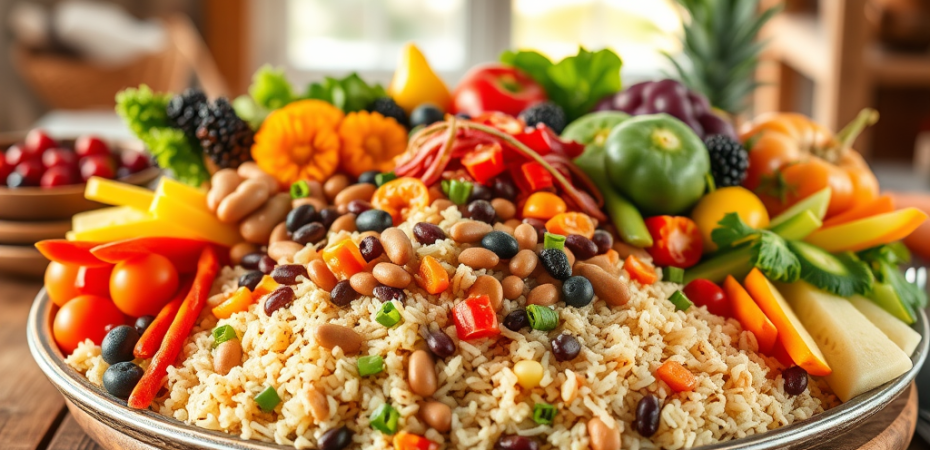
For example, beans and rice are staples in many of these diets, providing a good source of protein, complex carbohydrates, and essential nutrients. Over time, the body adapts to this consistent intake by:
- Efficiently utilizing nutrients: The body becomes skilled at extracting the necessary nutrients from the food, even if the diet is repetitive.
- Maintaining a healthy gut microbiome: A balanced gut microbiome helps to support immune function, digestion, and overall health.
- Regulating blood sugar and insulin levels: A diet rich in fiber and complex carbohydrates can help to regulate blood sugar and insulin levels, reducing the risk of chronic diseases like diabetes and heart disease.
This concept is often referred to as “nutrient-dense eating” or “eating for adaptability.” It emphasizes the importance of consuming whole, unprocessed foods that provide a broad range of essential nutrients, rather than relying on a diverse array of processed and packaged foods.
Implementing Nutrient-Dense Eating in Your Oil Free Vegan Whole Foods Diet
To incorporate the concept of nutrient-dense eating into your vegan whole foods oil free diet, follow these steps:
- Focus on whole, plant-based foods: Emphasize whole grains, legumes, nuts, seeds, fruits, and vegetables in your diet. These foods provide a broad range of essential nutrients.
- Eat a variety of foods, but not necessarily a variety of ingredients: Aim to include a variety of different foods in your diet, but not necessarily a variety of ingredients. For example, eat different types of beans, but also eat them frequently.
- Cook and prepare foods in a way that maximizes nutrient retention: Cooking and preparing foods in a way that minimizes nutrient loss can help you get the most out of your diet. Examples include:
- Steaming or sautéing vegetables to preserve their water-soluble vitamins
- Cooking grains and legumes to make their nutrients more bioavailable
- Using gentle heat and minimal water to cook foods
- Incorporate fermented foods: Fermented foods like kimchi, sauerkraut, and miso can provide a rich source of probiotics, which support gut health and immune function.
- Make your own nut and seed milks and butters: Making your own nut and seed milks and butters can help you avoid additives and preservatives found in store-bought versions.
- Incorporate healthy fats: Nuts, seeds, and avocados, are all great sources of healthy fats that support heart health and provide sustained energy.
- Stay hydrated: Adequate hydration is essential for nutrient absorption and overall health. Aim to drink plenty of water throughout the day.
Patricia here: For breakfast, I eat a fruit salad with chia and flax seed as protein, and soaked raisins with applesauce with cinnamon as a base. I make a large amount of the applesauce in a food processor from fresh raw apples and add some citrus fruit to help it keep longer. I also add the chia and flax to the apple sauce and soaked raisins so that they can get soaked and thus have more minerals and vitamins available. They are also easier to digest.
Then I chop up fresh fruit into the mix–whatever I have available, except for melons which I end to like to eat alone as a meal.
This is so delicious!
For lunch right now I am eating 2 slices of Ezekiel Bread, lightly toasted, with avocado and tomato on top. Then I put a generous portion of chopped wild green salad which has been massaged with some salt, and sauerkraut. I like mustard on the bread. This is very delicious and satisfying.
Sometimes I will eat squash I grew last winter along with Jerusalem artichoke instead of or with the bread–but always with my beloved wild green salad made up of whatever wild greens are available at the time. In the winter, I do buy organic kale and collards, but I do try to grow longevity spinach which is not wild, but another green I love to eat.
Here are the greens that I chop up finely:
Dock
Lambsquarters
Dandelions
Chickweed
Dead nettle
Clover
Jerusalem artichoke leaves
Winter cress
I continue to find more and more wild edibles to eat and I think they are a key part of my health.
I am moving towards eating breakfast and lunch only, and fasting from 1pm until 7am. I am not there, yet, but I do feel so much better drinking my daily green drink in the afternoon and other liquids or easy to digest food like watermelon.
Here is my green drink which I love to drink daily. I don’t have an exact recipe yet. But it is not rocket science.
64 oz apple cider or apple juice, not made from concentrate.
Take 1 quart and put in a Vitamix
Add a generous portion of raw ginger
Add some cayenne
I even put avocado seeds in–maybe 3 or 4
5 apples, cut up.
I save my nutritious pineapple cores–and add that.
I save apple cores, and add them.
about 1/2 cup super greens, with some spirulina. I might start adding fresh greens.
Blend thoroughly.
Get a large bowl and add the mix, clean out the vitamix with another quart of water and add another quart to the big bowl. Total–2 quarts.
mix together.
Partially fill up quart jars with the mix.
add about 2 tablespoon dry chia seed to each quart jar. Shake well then fill up the jars with the rest of the mixture. add water if necessary to make sure all the jars are filled to the top.
Let the jars sit about 1/2 hour to absorb liquid into the chia seeds. Refrigerate.
I find this drink to be very sustaining.
When I get hungry in the time I want to fast from 1pm onwards, I will eat about 8 chlorella tablets. I want to start chewing on greens and then spit them out so I get the chlorophyll naturally. This is also good for teeth and gums.
I don’t eat this way every single day because I work for a vegetarian client twice a week right now who serves me cooked vegan food for lunch, and I top it off with avocado and my beloved salad. It is nice to have a little variety, when this job ends, I am pretty sure I will most often eat my simple diet.
This simplicity helps me save time to do other things and perhaps my body is adapting to it so that it satisfies all my needs. I am very healthy, although I was feeling a drop in my energy a few months ago which I did not like. When I discovered from Utchee Pines Institute and the White Creek Wellness Center the teaching of two meals a day and a long intermittent fast, I felt really inspired to adopt this method that I had been leaning towards but did not have the discipline to follow.
My energy has increased, I feel closer to Jesus than ever and feel more joy as well. I was starting to use food as an emotional crutch and that was super unhealthy for me.
Thanks for reading this. Your input is very welcome. Love to all beings and the earth!

