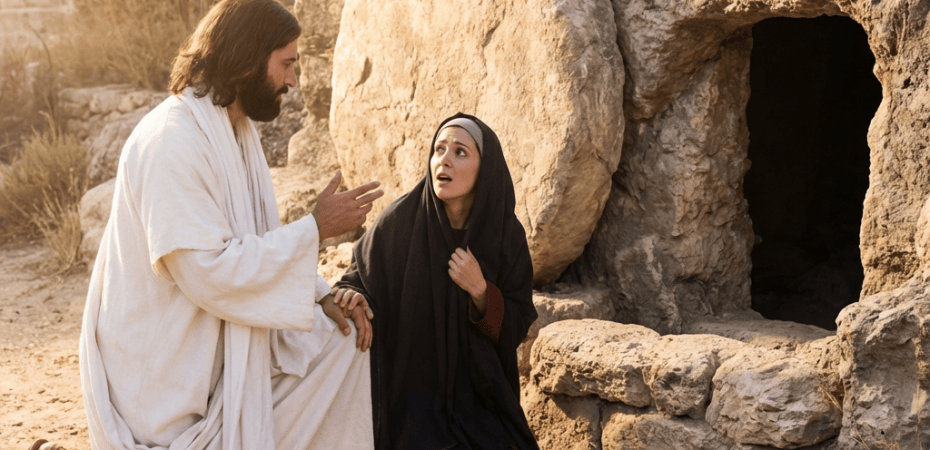
One of the most pivotal moments in my spiritual journey came when I realized I didn’t have to check my intellect at the door to follow Jesus. Leaving the Methodist Church which I had attended with my parents for 16 years, left me on a 33 year search for truth. I had never been presented with a logical reason to follow Jesus, so when I met Christians who were both loving and logical, I was inspired to explore Christianity once again. When I was introduced to Christian apologetics—the thoughtful defense of the Christian faith—my objections to following Jesus were finally overcome..
Authors like Josh McDowell, who wrote the classic More Than a Carpenter, and Lee Strobel, author of The Case for Christ, showed me that rigorous investigation could actually lead to faith. McDowell started as an agnostic, determined to disprove Christianity, but his research into the historical reliability of the Scriptures and the claims of Jesus convinced him otherwise. Strobel, a former atheist and legal journalist for the Chicago Tribune, approached the evidence like a courtroom case. He interviewed experts in history, archaeology, and ancient manuscripts, and the cumulative weight of the facts led him to conclude that Jesus truly was the Son of God.
Their stories encouraged me: faith isn’t blind; it’s a reasonable response to evidence.
The Resurrection: The Heart of Christianity
Today, many Christians around the world celebrate the Resurrection of Jesus—the event that stands at the center of our hope. (Note that Orthodox Christians often follow a different calendar, so their Easter may fall on a different date.) The resurrection isn’t just a nice story; it’s the linchpin of Christian truth. Without it, as the Apostle Paul wrote, our faith is futile (1 Corinthians 15:17).
One scholar who has devoted an extraordinary amount of work to this topic is Gary Habermas. His multi-volume magnum opus, “On the Resurrection”, spans thousands of pages across several volumes (with the first volume alone exceeding 1,000 pages), meticulously examining the historical evidence, refutations of alternative theories, and scholarly debates. Habermas is widely regarded as one of the foremost experts on the subject, and his “minimal facts” approach focuses on data that even many skeptical scholars accept.
Here are some of the main historical proofs that support the reality of the resurrection (drawn from the work of Habermas, Strobel, and other historians):
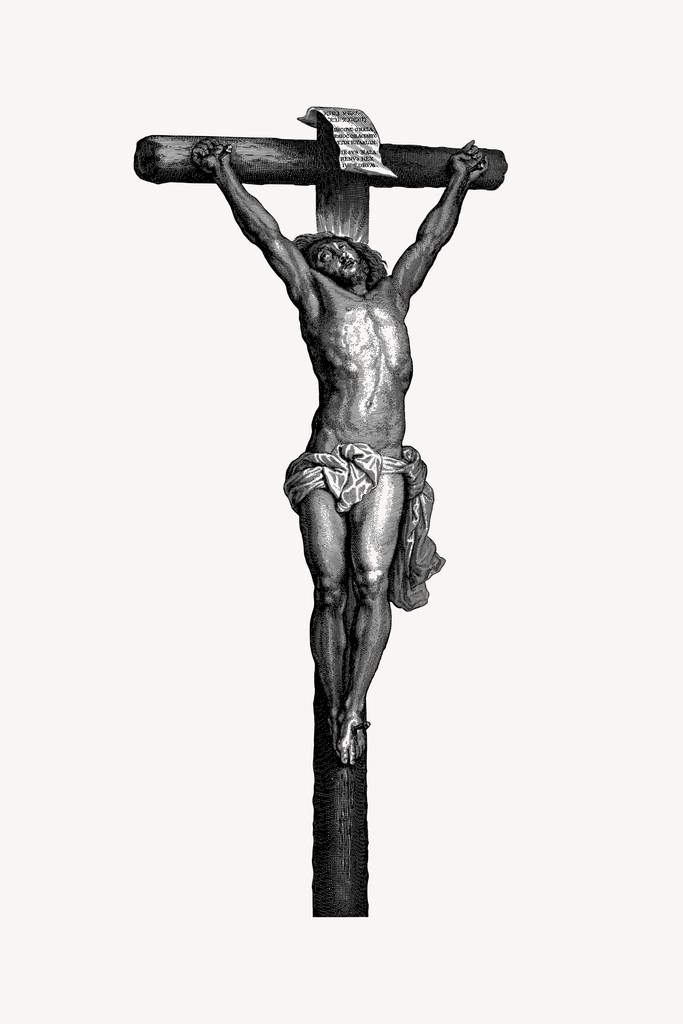
- Jesus’ death by crucifixion is one of the most securely established facts of ancient history. Multiple sources, including Roman historians like Tacitus and Jewish sources, confirm it. Medical experts note that the combination of scourging, crucifixion, and the spear wound makes survival impossible.
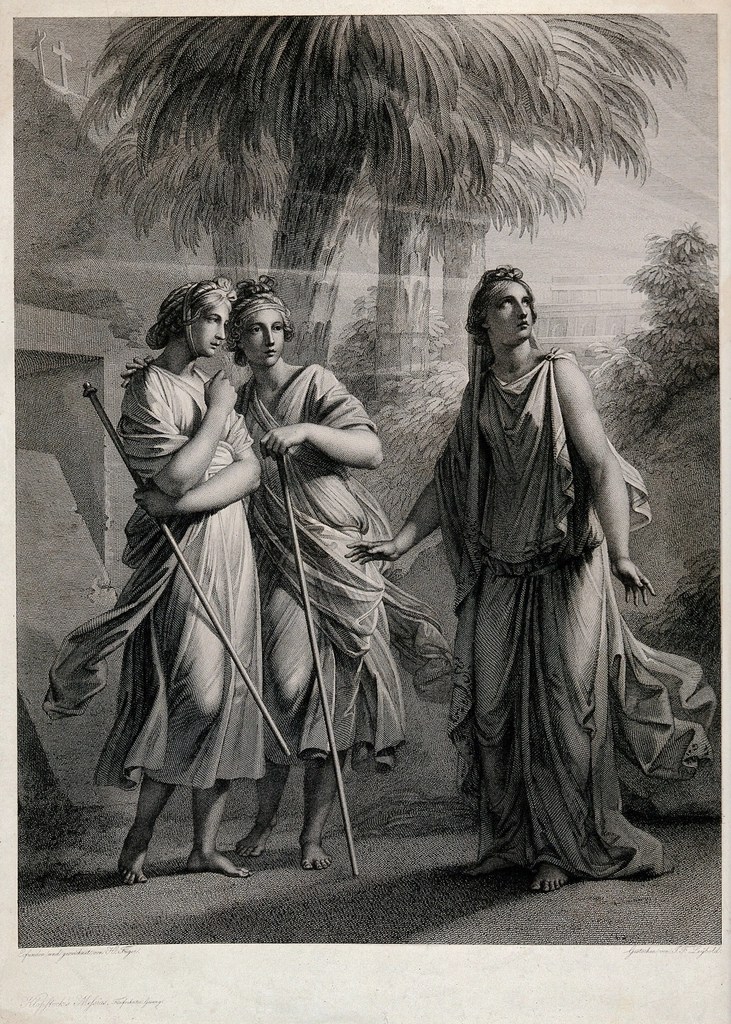
- The empty tomb: Women (whose testimony was undervalued in first-century culture) discovered the tomb empty. This detail is unlikely to have been invented, as it would weaken the story’s credibility in that era. The tomb belonged to Joseph of Arimathea, a known Sanhedrin member—again, an embarrassing detail if fabricated.
- Post-resurrection appearances: Jesus appeared to individuals and groups, including skeptics like His brother James and the persecutor Paul (formerly Saul). These weren’t vague visions; people ate with Him, touched Him, and interacted physically. Over 500 people saw Him at once, according to Paul in 1 Corinthians 15—a claim made early enough that living witnesses could have refuted it.
- The transformation of the disciples: These men went from fearful cowards hiding after the crucifixion to bold proclaimers willing to die for their testimony. People don’t willingly die for a known lie. The rapid spread of the early church in a hostile environment further supports that something extraordinary happened.
- Early creed and testimony: Scholars date the core resurrection proclamation in 1 Corinthians 15:3-7 to within a few years of the events (possibly as early as the 30s AD). This leaves little time for legend to develop.
Lee Strobel explores these and more in his book “The Case for Easter”, building a compelling journalistic case that the resurrection best explains the historical data.
Alternative explanations—like the body being stolen, mass hallucination, or the “swoon theory”—fall short when scrutinized. The evidence points strongly to a real, bodily resurrection.
A Christian Universalist Perspective
As a Christian Universalist, I believe the scope of Jesus’ victory is far greater than many traditional Christian doctrines acknowledge. I believe with all my heart and mind that Jesus died for all humanity, and that ultimately, all will be redeemed and reconciled to God. This isn’t wishful thinking since it’s rooted in Scripture.
Some key biblical supports for this view include:
– God’s explicit desire: “God our Savior… wants all people to be saved and to come to a knowledge of the truth” (1 Timothy 2:3-4).
– The parallel in Romans 5:18: Just as one trespass (Adam’s) resulted in condemnation for all, so one righteous act (Christ’s) results in justification and life for all.
– 1 Corinthians 15:22: “For as in Adam all die, so in Christ all will be made alive.”
– Passages emphasizing ultimate reconciliation: Colossians 1:19-20 speaks of God reconciling *all things* to Himself through Christ, whether on earth or in heaven. Philippians 2:10-11 foresees every knee bowing and every tongue confessing Jesus as Lord.
– The promise that God will be “all in all” (1 Corinthians 15:28), with no exceptions lingering in separation.
Universalists point to the Greek word aion(often translated “eternal” or “forever”), which can refer to an age or long period rather than endless duration in every context, allowing for corrective judgment that leads to restoration rather than endless torment. Early church fathers like Origen and Gregory of Nyssa held similar hopeful views of eventual universal reconciliation.
The Meaning of the Cross in Universalism
The resurrection confirms the power and victory of the cross. But how do we understand Jesus’ horrific death—not as a reluctant Father punishing an innocent Son in our place (the penal substitution view common in some traditions), but in a way that aligns with God’s loving character?
In the Christian Universalist understanding, the atonement is often seen through lenses like Christus Victor (Christ’s victory over sin, death, and evil powers) or *recapitulation (Jesus summing up and healing humanity’s story from within). Jesus entered fully into our brokenness, suffering the worst that evil and human systems could inflict. On the cross, He absorbed the consequences of sin, defeated death, and revealed the depth of God’s self-giving love.
His death wasn’t about satisfying divine wrath through substitutionary punishment, but about God in Christ reconciling the world to Himself (2 Corinthians 5:19). It was the ultimate demonstration that love is stronger than death, sin, or separation. The resurrection then vindicates this victory, proving that nothing—not even the grave—can thwart God’s redemptive purpose for *all* creation.
Jesus was willing to endure that suffering because of His profound love for humanity. Today, I celebrate the resurrection with deep gratitude: death is defeated, hope is alive, and the story ends in restoration, not endless loss.
If you’re exploring faith, I encourage you to investigate these claims for yourself, as McDowell and Strobel did. Whether you’re skeptical or already a believer, the resurrection invites us to a faith that engages both heart and mind.
He is risen indeed! May this truth fill you with hope today and every day.
…………
Thanks to Grok.com for helping me write this story.



Thank you, Patricia, for affirming out loud the heart and center and ever-expanding periphery of our hope in Jesus. We have walked on several of the same touchstones along way, and I need and value hearing from “believers” like you who are at peace with your faith. I am still grieving, or fighting, sometimes one sometimes the other. I took a course with Gary H. a few years ago trying to settle for myself once and for all if I could, or would, be able to accept with head and heart the living Jesus. I want to be deeply re-pursuaded that he is alive. And yet that enormous “truth” (not yet an experienced reality) complicates everything (for me). I think it was Henri Nouwen who, regarding how we can sometimes feel about the big consequences of Jesus’ resurrection, quipped: “if only he had stayed put.”
As the world around us groans with expectation I hope you enjoy your community and the coming of springtime.
I feel happy to hear from you and grateful you were inspired by my post.
Patricia Mikkelson
Professional Organizer and Simplified Living Coach http://www.becomeorganized.wordpress.com