
People often ask me what I mean when I say I am a Christian Universalist, not just a Christian. Here is the simplest way I can put it: I believe God’s love is so big and so powerful that, in the end, every person will be reconciled to Him through Jesus Christ. I do not believe in eternal conscious torment. I believe the Bible teaches that God will make all things new.
I have written about this many times on this blog over the years. This article gathers those pieces into one story.

A Question at Sixteen
I grew up a Navy kid, moving from place to place. Wherever we landed, my parents joined the nearest United Methodist Church, and that was my security. I loved the activities. The long sermons, not so much.
When I was 16, in 1970, I asked our youth pastor an innocent question: “Why do we have to go through Jesus to get to God?” He laughed at me. That was the last straw. I had already seen hypocrisy in the church, and I was more drawn to Buddhism than to Christianity. A Buddhist speaker our youth group counselor had invited made more sense than anything I heard during Sunday services. I told my parents and the pastor I was quitting. No one objected.
For the next thirty years, I searched. I explored Jehovah’s Witnesses, Self-Realization Fellowship, Buddhism, Church Universal and Triumphant, Native American teachings, paganism and more.
When I was 18 and still an agnostic, I sensed that God was telling me to travel. I flew alone on a one-way ticket and spent 13 months traveling through Turkey, Iran, Afghanistan, Pakistan, India and Sri Lanka. I saw great suffering. I was lonely and sick at times, and in danger more than once. Looking back, I can see God protecting me the whole way, even though I did not believe in Him. On the flight home, my outlook changed from “if it feels good, do it” to “I will only be happy if I serve and joyfully use my talents.” I believe it was truly an epiphany from God.
Through those years, Christians kept asking me, “Are you saved?” When I said no, the answer was always the same: “Then you are going to hell.” “How do you know?” “Because the Bible says so.” “Why do you trust the Bible?” “Because the Bible says so.” I would not argue with circular reasoning, so the conversations ended there.
Found by Love at Prayer Lake
In 2000, my family moved to the country here in Madison County, Arkansas. One day a neighbor waved my husband down as he drove by with our kayak on the truck and told him we were welcome to put it in at Prayer Lake anytime. I used to drive past that lake and think, “Those rich people would never let us swim there.” So much for negative, judgmental thinking!
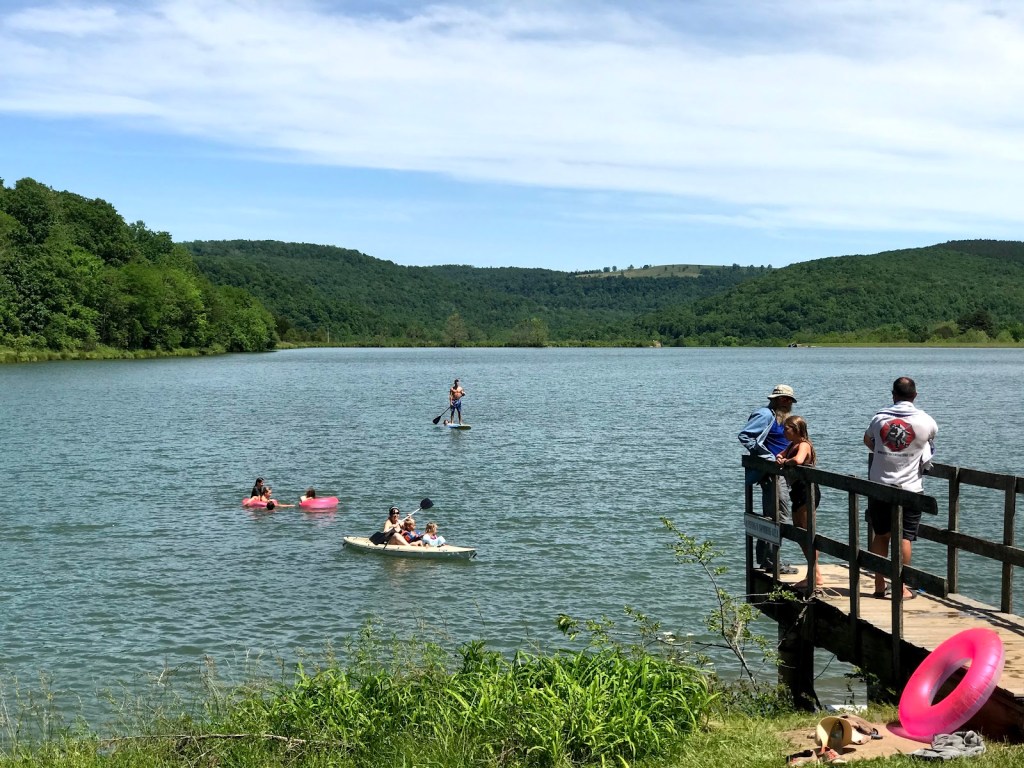
Because of our outing on the lake the following Sunday, we met families from a house church. The very first thing I told the ladies was, “I’m not a Christian, and I don’t want to be converted.” They did not push. They just loved us. They invited us to potlucks, homeschool groups and birthday parties. About 40 people of all ages came to my daughter’s fifth birthday party. That is how I believe Christians should treat people who do not share their faith.
I studied Christian apologetics, the reasoned case for the faith, and I watched how these people lived. In 2001, driving down the road, I said, “I surrender to you, Jesus, at least for now. If it doesn’t work out, I’m out of here!” A peace came over me that I could almost touch. Soon after, my husband and my five-year-old daughter made their own confessions of faith, and my son followed about a year later.
But even then, I could not accept two things most of my new friends believed: penal substitution and eternal conscious torment. I say “eternal conscious torment” instead of “hell” on purpose, because it shows the full weight of what that teaching claims a loving God would do. Penal substitution is the idea that God had to abuse His Son in order to save us! Derek Flood makes a clear case against it in his article Healing Toxic Faith: Did Jesus Die to Save Us from God?
Finding Words for What I Already Believed
In 2014, I found the Christian Universalist Association website, and its words struck a chord deep in my soul. I wrote my first blog post about it in 2015. After many hours studying scripture and reading people who know it inside and out, I was convinced: this is what the Bible teaches.
Here is how I explain why eternal torment never made sense to me. Imagine I invite you to join my community and stay for the rest of your life. You say, “No, thank you.” Then I say, “All right. Since you refused my beautiful offer, I am going to make you suffer forever.” Yikes! No loving parent would do that, and God loves far better than any of us.
The Bible is full of this hope:
“For as in Adam all die, so in Christ all will be made alive.” (1 Corinthians 15:22)
“We have put our hope in the living God, who is the Savior of all people, and especially of those who believe.” (1 Timothy 4:10)
God “wants all people to be saved and to come to a knowledge of the truth.” (1 Timothy 2:4)
Through Christ, God was pleased “to reconcile to himself all things, whether things on earth or things in heaven.” (Colossians 1:20)
Every knee will bow and every tongue will confess that Jesus Christ is Lord. (Philippians 2:10-11)
Many early Christians believed this too. Church fathers such as Origen and Gregory of Nyssa taught the restoration of all things. And many Bible scholars point out that the Greek word often translated “eternal,” aionios, can mean “of the age,” which is very different from “forever and ever.”
The word Gospel means “good news.” “Believe the right way or God will torment you forever” is not good news. “God’s love will never give up on anyone” is.
Why I Am So Happy to Be a Christian Universalist
I have often been an early adopter. In the 1970s and ’80s, I was eating whole foods, gardening organically, homeschooling and having home births long before those things were common. Living against the current was not easy. My own family did not always approve. But I learned to live with disapproval, and I watched many of those choices become widely accepted.
Christian Universalism has been like that for me. I have lost friends and been rejected by Christians for believing God will save everyone. Yes, I felt hurt and even angry. I have forgiven them, and I pray for them. And now I see this hope spreading everywhere: books, podcasts, YouTube channels, films and online fellowships. When I first wrote about it, there were only a few resources. Today there are so many.
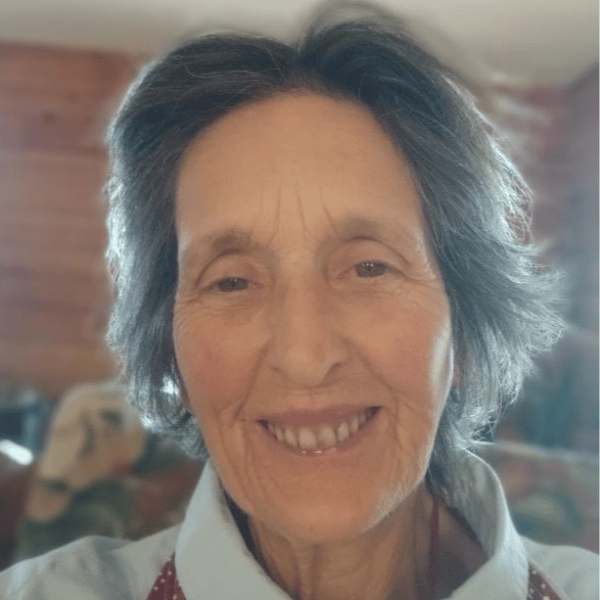
I am more convinced than ever, and so glad I found it early.
Living Loved Every Morning
My faith is not just a doctrine. It is a relationship. For several years now, I have spent time each morning with Jesus here at the Living Springs Log House. I am grateful to Dr. Karl Lehman, whose Immanuel Approach inspired this practice. The time flies by. Through it I have found deep healing from past trauma, more stability, and a peace that is not easily shaken.

Recently I have also begun to grieve and pray for the animals during this time. Which brings me to the other half of my heart.
How My Faith and My Veganism Fit Together
I became a vegetarian at 17, after watching Lassie and realizing that dogs are no different from cows and pigs. About ten years ago, at Comic-Con in San Diego, a short video at a farm animal rights booth finally put me over the edge. I went vegan and never looked back.
To me, Christian Universalism and veganism grow from the same root: God’s mercy has no limits. “The Lord is good to all; he has compassion on all he has made.” (Psalm 145:9) If God’s love reaches every person, it reaches every creature too.
In the beginning, God gave Adam and Eve plants to eat (Genesis 1:29-30). The prophet Isaiah promises a day when the wolf will live with the lamb, and no one will harm or destroy on God’s holy mountain (Isaiah 11:6-9). Paul writes that creation itself will be set free from its bondage to decay (Romans 8:19-21). And Colossians says God will reconcile “all things.” I believe the restoration of all things means Eden restored: a peaceful world for every person and every creature.
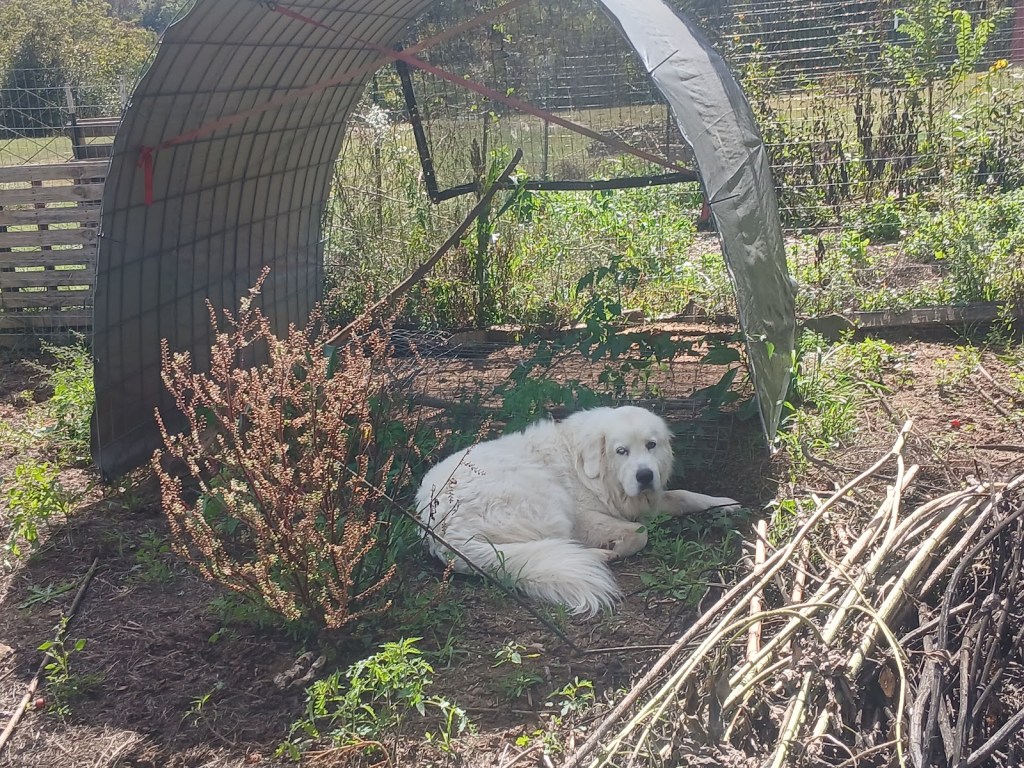
Living vegan is how I try to live that future now. It is my way of doing the least harm possible and showing love to all God has made. When I first came to the Living Springs Log House, my first dream was to start Jesus Vegans, to draw attention to what I believe: true Christianity is vegan. That has put me in an unusual spot. Many Christian Universalists don’t warm to the idea that following Jesus means living vegan, and many vegan Christians don’t warm to my Christian Universalism. So I often find myself outside the circle of Christians on both sides. I have made peace with that. I would rather be faithful to what I see in scripture than fit in, and I trust that one day we will all sit at the same table.
I still respect and welcome people who see these things differently. God is patient with all of us, and I want to be patient too.
That’s My Story
As my father used to say, “That’s my story and I’m sticking to it!” I am a Christian Universalist because I trust Jesus, and I believe He meant it when He said, “And I, when I am lifted up from the earth, will draw all people to myself.” (John 12:32) Love wins.
If you have been hurt by the fear of hell, or you wonder whether the good news is even better than you were told, I hope these resources bless you as they have blessed me.
Resources I Recommend
- Christian Universalist Association, where I first found the words for what I believed.
- Hope for All Fellowship, a warm online fellowship led by Gerry and Denise, where I have grown so much.
- Mercy on All, a website full of articles and book reviews.
- Robin Parry, my favorite Christian Universalist, humble and funny. Watch his overview talk here.
- The Orthodox Universalist on YouTube: short, clear and logical videos.
- Love Unrelenting on YouTube.
- Baxter Kruger, who teaches beautifully about the love of the Father, Son and Holy Spirit.
- Eternal Theater, a documentary that re-examines the traditional teaching on hell.
- The Immanuel Approach, Dr. Karl Lehman’s website, with free resources for meeting Jesus in prayer and healing.
You can also read my earlier posts: How I Came to Be a Christian Universalist and Value: Christian Universalism.
Written together with Claude: The life story, ideas, Bible study and years of research in this article are Patricia’s, drawn from her earlier posts on this blog. Claude helped combine them, write the article and expand the research.
Bible quotations are from the New International Version.


[…] a Christian Universalist, I believe the scope of Jesus’ victory is far greater than many traditional Christian […]
[…] norms and strength to do things that make it hard for me to belong anywhere. Being a Christian Universalist vegan who wants to create and live in a super simple, in harmony with the earth community where we […]
[…] How can we deal with the trauma we experience from the rejection that comes from being a Christian Universalist? […]
[…] people feel a need to hide this fact, but I know it is an important aspect of my being. I am also a Christian Universalist, which means that I do not believe in eternal conscious torture of people who do not subscribe to […]
[…] a Christian Universalist, vegan and a believer in reincarnation, has brought me persecution and rejection. As a vegan […]
[…] I have confidence that eventually we will all be reconciled with each other and with God. Being a Christian Universalist gives me so much confidence that we will all come together in peace in the end. In the mean time, I […]
[…] Vegan Conservative Christian Universalist is what I am for […]
[…] I know! What’s with this attitude? I almost left my faith when I proclaimed that I was a Christian Universalist, and people who I cared about criticized me for this belief. I felt rejected and hurt. I’m […]