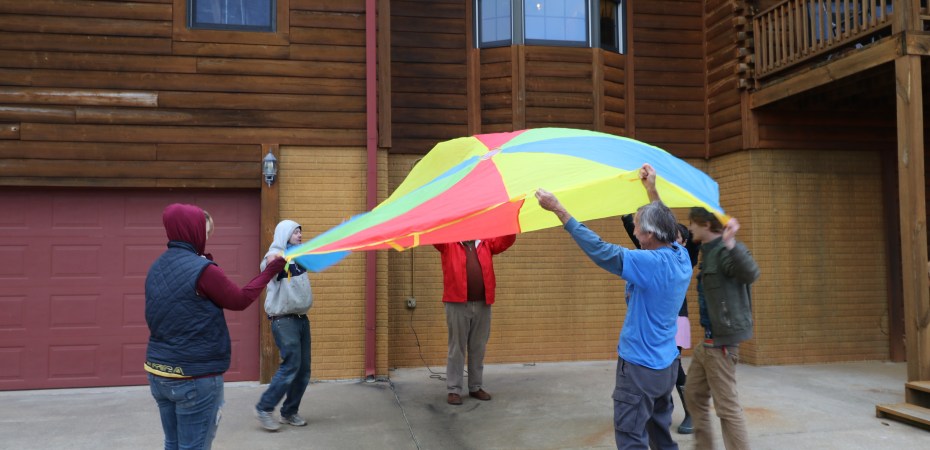
Connecting with your neighborhood and the town you are in or near by, is a fantastic way of spreading both the vegan message as well as intentional community message. This can’t be just a public relations move, but rather a sincere effort to serve in ways that really help people. As people from the outside see the way community members love each other and love people on the outside, more people will be attracted to the message.
When community members enter into the life of your neighborhood/town, more life-giving veganism can flow through you to your neighbors.
On the other hand, without a strong community presence, a community’s success in inspiring people to go vegan and become activists can actually undermine the community’s reputation because they might be seen as a cult.
Overcoming the barriers that come up between both being vegan and living in an intentional community requires a conscious effort both to welcome people into the community, and to bring the community out into the neighborhood.
Here we give some suggestions for cultivating an outreach-minded vegan community:
- Host activities like classes, vegan potlucks, social events and community gatherings which are designed to help people network and connect.
- Network in the community.
Networking is the exchange of information, ideas and resources. The goal of networking is to build relationships as you gather information, scout out potential allies, and let others know about your community. Another benefit of networking is that it builds the community’s reputation in the wider community. The people you contact begin to think of the community as a potential partner in the area of shared concerns. They will treat the community differently and include the community in meetings it has not been invited to before.
- Cultivate a sense of belonging to the community.
Help the community members to think about residents of the neighborhood as important people to connect with. Cultivating a sense of belonging is a transformational process that unfolds through many small steps. Encourage community members also to identify with the neighborhood. Participate when a tragedy strikes, and go to events sponsored by other groups which are related, like climate change, fur-bans and help with refugees. One idea would be to develop a profile as a neighborhood-oriented community.
For example, through wise use of media contacts to publicize community events or by consistently sending representatives to neighborhood or city council meetings, increases the likelihood of support. Becoming known as the community that gets involved in local issues will help open doors to resources and collaboration. Recognition is the first step toward trust.
- Incorporate a commitment to have activities at your community that don’t always promote veganism. Here are some self-examining questions:
- Do the conversations you have with people who come to community events always involve veganism?
- What do the art and signs tell people? Do you talk only about veganism, or about the compassion, community, cooperation, etc?
- Do the needs of people outside the community and the issues faced by the community or other lands around the world regularly find their way into your bulletin boards or announcements or social media?
- Is information about community events promoted via a bulletin board?
- Interweave the interests of the intentional community and neighborhood. Sponsor activities that include a vegan potluck but which also address some of the problems of the neighborhood. Just about everyone struggles with needing more resources, feeling valued and having connection. Creating a Time Bank can help meet such needs. Needs more definition. ~Jessie (i added a few
- Take the community out into the neighborhood/town. When we do service projects like feed the homeless with vegan meals, or have a free vegan dinner for the needy on Thanksgiving we are able to build bridges and be examples of vegans who care about all animals–human and nonhuman. To possibly create further continuity among the community, large scale community projects could be implemented, such as:
Creation of city and regional parks
For the protection of all ‘wild’ persons. Trail creation and maintenance.
City beautification and re-wilding
Tree planting, food forests, native plants, shrubs, etc.
Clean-up days
Keeping our community beautiful
Resources:
“Intentional Communities: How do we grow this movement fast?” Fellowship for Intentional Community.
“Building Bridges”. Kaleidoscope Institute.

